some have it...
some just fake it
truth be known she hates
her folger's freeze-dried crap
some have it...
By Brooke Bryant
CONTRA COSTA TIMES
And some people, like Moraga native Kate McMahon, look for a little social responsibility.
"My main goal is helping people become aware that just changing what cup of coffee they drink in the morning can make a difference," McMahon said, sipping a cup of fair-trade coffee earlier this month at Moraga's Caffe Terzetto.
McMahon returned home this summer after graduating from Occidental College with a bachelor's degree in psychology and decided that her hometown was ripe for a little social change. So, while she looked for employment, she also launched a fair-trade coffee campaign aimed at convincing businesses and residents alike to start sipping and serving java that is purchased from coffee farmers at a fair price.
That price is at least $1.26 per pound -- a big increase over the 30-50 cents per pound that farmers usually make, said McMahon, 22. The fair trade certification also means that a farmer employs environmentally sustainable practices and doesn't use forced and child labor, while buyers deal directly with the farmers, cutting out the middlemen (called "coyotes" in Latin America) who typically absorb much of the profits on the free market, she said.
McMahon, who was introduced to the fair trade concept in a college class and turned to the Internet to learn more, started by approaching local cafes.
Within a few weeks, she had convinced Terzetto's owner to switch her entire stock of coffee products to fair trade, without raising prices.
Other businesses and groups have been slower to get on board, but McMahon still has big plans for the town. She wants to work with professors at St. Mary's College to incorporate fair trade into their classes, and eventually switch the college to fair-trade coffee, and she plans to lobby the Moraga Town Council to either encourage fair-trade coffee use in town, or at least serve it at their own meetings.
Moraga isn't a progressive haven like Berkeley, but McMahon said she figured the fair trade movement was perfect for the town.
"I thought the coffee campaign would be really good, because I felt like if I had come here with a different campaign like 'Save the animals' and 'Don't buy fur,' it wouldn't be as effective as, 'All you need to do is change your cup of coffee,'" she said.
Fair trade coffee accounts for about 2 percent of the coffee sold in this country, which puts conscientious coffee drinkers like McMahon solidly in the minority. But she's also part of what fair trade advocates call the fastest growing sector in the coffee business, with U.S. sales increasing from $48 million in 2000 to $369 million in 2004.
These days, coffee drinkers can get fair-trade coffee at national coffee chains such as Starbucks and grocery stores such as Safeway. Even McDonald's jumped on the fair trade bandwagon this fall, offering fair-trade coffee in some of its New England restaurants.
Advocates say that fair trade retailers are able to keep prices down by cutting out the middlemen, and note that in recent years fair-trade coffees have won awards for taste.
Most importantly to many, the movement has generated an extra $67 million in income for coffee farmers since 1998, according to statistics from Oakland-based TransFair USA, which certifies fair trade products.
Critics say that fair trade interferes with the free market, offering artificially inflated prices that hinder the market forces that usually control supply.
Fair trade certification groups like TransFair even sometimes come under fire from the activist community, TransFair spokeswoman Nicole Chettero said. Some grumble about "green washing" -- when a company switches a small percentage of its stock to fair-trade to take advantage of the good PR.
But even a small percentage of sales from a coffee giant like Starbucks translates into a lot of extra dollars for coffee farmers, Chettero said. Fair trade certified coffee was just 1.6 percent of Starbucks' coffee purchases in 2004, but that amounted to 4.8 million pounds of coffee, which was more than double the amount it purchased in 2003, according to a Starbucks report.
"We see things from the position of the farmer," Chettero said. "We want to increase as much fair trade revenue as possible, so we see the dissemination of fair trade products in mainstream as helping."
For McMahon, the decision to drink fair trade was easy.
She says that the time she spent in a Buddhist monastery over the summer helped make her more aware of her connection to the rest of the world, including all the work that goes into her morning cup of coffee. She is used to finding practical applications for her principles, steering clear of stores like Wal-Mart, buying sweat-shop-free clothes, and recently moving into an eco-friendly house in Walnut Creek.
"I try to keep myself to a standard of valuing other people and trying to live by those values [with] what I buy and all that stuff," she said. "I felt like I was being hypocritical going and drinking coffee that was made by child slaves."
Coffee, red wine and chocolate are the key to preventing heart disease, it was claimed yesterday.
Glasgow University professor Alan Crozier told a conference the so-called "bad foods" actually protected the heart and arteries.
And he told delegates: "Have a cup of coffee, drink two or three glasses of red wine a day, take a cup of green tea, eat 100 grams of dark chocolate and be happy."
He was addressing the World Congress of Cardiology in Barcelona.
The professor said all the foods he mentioned were rich in antioxidant properties.
They protect the heart and arteries from oxidative damage, similar to the rust that develops on metal after a period of time.
Dark chocolate can boost levels of antioxidants in the blood by 20 per cent while drinking red wine can also help fend off heart disease.
Professor Crozier said that New World wines with ample sunshine, including Chile, Argentina, Australia and South Africa, were the best when it comes to producing the antioxidants.
Table grapes, which were often picked early, had fewer antioxidants even when they were of the same variety as wine grapes, which had been left to ripen thoroughly.
But the Glasgow professor of plant biochemistry and human nutrition warned that because of the adverse effects of excessive alcohol, it should be no more than 2-3 glasses of red wine per day.
He said milk chocolate did not have the same healthy properties as dark.
A recent study revealed that you need twice as much milk chocolate as dark chocolates to obtain the same amount of antioxidants.
Professor Crozier said: "Eating seemingly 'bad' foods may seem like a good idea, and in fact can be not too bad a thing - if chosen carefully and eaten in moderation.
"Foods with high levels of antioxidants can cut the risk of heart disease and some types of cancer."
Some fruits and vegetables also have high antioxidants.
Adding cherry tomatoes to a salad rather than normal sized tomatoes can also boost health as they contain 10 times the level of antioxidants.
And using lollo rosso lettuce will provide much higher amounts of antioxidants than iceberg lettuce.
Professor Crozier also said that frozen berries such as blackberries, redcurrants and raspberries were a rich source of antioxidants.
STUDENTS should be given fish oil to boost their brainpower, it was claimed yesterday.
After trials in England, scientists believe omega-3 fatty acids in the oil can improve mental ability.
Fish oil has already been heralded as good for arthritis and heart disease.
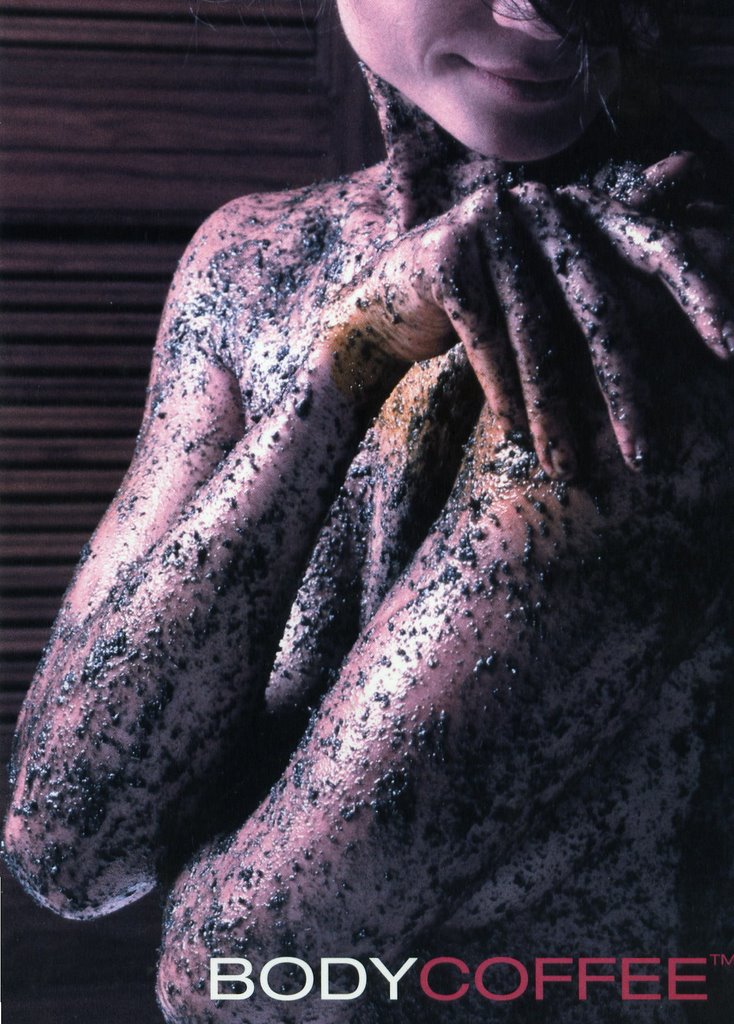 coffee-based moisturizers?
Coffee’s my hobby. I just want to share a few rare taste treats with you. You may have heard about this first one –
Civet Coffee. The civet is a small asian weasel that eats coffee from the bush. After the beans have passed through the civet’s digestive system, beans are sorted from the scat and roasted. It has its adherents. A two ounce package sells for $43.60 — that’s $268.80 a pound.
The following blends are rarer still –
Sunset Plaza Grind. Quality beans and proper roasting are hardly the point. Coffee beans are scattered on the sidewalk of Sunset Plaza between the Armani store and Le Dome restaurant. The likes of Whoopi Goldberg, Julia Roberts, Richard Gere, Nicole Kidman, and Tom & Katie grind these beans underfoot. They are of course wearing Manolos, Loeffler Randal, Vivier, Beruti, and A. Testoni brand shoes. The grind is swept up with a titanium-handled broom made from the chest and back hair of Tom Selleck. The creators of SPG recommended brewing with a 23-karat Swiss Gold coffee filter. Price? If you have to ask…

This daily contact is seen as a means of speeding up reconciliation by fostering relationships and building communities.
Understanding
Aimee, who lost both her parents in the conflict, said she needs to work to support her younger brother and sister.
While the pay is low, she says the coffee plantation is playing an important role in uniting people.
"I have been here for two years," she told the World Service's Outlook programme.
"I can't hate. Even those who killed my parents later died so why should I create more enmity by sowing hatred. Here, we are friends because we have the same problems.
"Even the women whose husbands have been in prison as genocide suspects or children like me whose father are genocide suspects - we understand each other, we don't have any quarrels."
Fellow worker Beatrice Karigirwa's husband and most of her relatives were killed in the genocide. She has one surviving brother who is in the army.
"My job has given me hope for a better future and enables me to live peacefully with other women," she said.
"After the war, I didn't want to live with anyone because of what was done to me. But as time went on and as I lived with people here, I gradually healed."
She said hearing the stories of fellow workers, some of whom have no family left, has helped the healing process.
"I know my problems are not the worst," she said.
"Coffee has played a big role in the progress of this country. We live in harmony with Rwandans from different areas.
"If we all stayed at home we would all be thinking in the same way as before but coming to work in the coffee industry has taught us a lot."
High-grade coffee
Rwanda has decided to concentrate on speciality coffees - which became popular in the US and Europe in the 1990s - and to sell them through fair trade deals.
In 1990, Rwanda exported 45,000 tonnes of coffee a year, but that plummeted following the conflict.
With competition growing from newcomers such as Vietnam, the government has decided to focus on high-grade coffee with the aim of returning to 1990 production levels by 2010.
Fatuma Ngangiza, of Rwanda's Unity and Reconciliation Commission set up in the wake of the genocide, underlined coffee's importance to the country.
"You don't reconcile in a vacuum," she said. "There must be a practical programme, there must be something that brings people together.
"As they work together, cleaning the coffee, they talk together so they start talking business but later they start talking family affairs.
"It fosters relationships and reconciliation."
People attempting to kick the coffee habit may now wonder why they should bother. A spate of new studies seems to find nothing but virtue in the popular drink; in some respects, coffee apparently even leaves fruits and vegetables in the dust.
One of the big surprises is that coffee is loaded with antioxidants. These substances help control cell damage and hold promise for fighting cancer and other diseases. Study results from the University of Scranton, in Pennsylvania, released this month, found that the average adult gets 1,299 milligrams of antioxidants from coffee each day. The nearest food source, bananas, did not even come close: It contributed only 76 milligrams of antioxydants to the typical American diet.
A review of studies published in last year's Journal of the American Medical Association found a consistent association between coffee drinking and a lower risk of Type 2 diabetes, the most common form. In fact, the more coffee people drank, the lower the risk. Four to six cups spelled a 28-percent lower risk; more than six cups brought a 35-percent lower risk (and probably a serious case of the jitters).
Nor is that all. Research for the Iowa Women's Health Study recently turned up a lower risk of cardiovascular disease among women who had one to three cups of coffee each day. Japanese researchers found that, compared with coffee avoiders, coffee drinkers had half the risk of developing liver cancer.
Nutritionists say none of this is enough reason to start bypassing fruits and vegetables, which Americans still consume too little of. Moreover, the caffeine in coffee can produce ill effects in some people -- for instance, hampering blood flow to the heart, or increasing blood pressure.
Still, coffee is looking less like a vice than it once did, and more like a health food. For those trying to kick the habit anyway, the good news is that coffee's apparent benefits flow as much from the decaffeinated as from the full-octane variety. So, until you next hear from us, enjoy a cup.
| ||
Coffee could slow mental decline in old men By staff reporter | ||
| 17/08/2006- Three cups of coffee a day could slow the loss of mental function in men, says a European study. The results appear in line with a growing body of evidence linking coffee consumption to improved cognitive function, and follow a recent report from Austria that “showed” how caffeine boosts brain function through its effects on distinct areas of the brain. The Austrian results, presented at the annual meeting of the Radiological Society of North America in December, were said to be the first to demonstrate a visible impact on the brain from caffeine. The new results, published on-line ahead of print in the European Journal of Clinical Nutrition ( doi: 10.1038/sj.ejcn.1602495), now suggest that older men may also benefit mentally from regular and moderate coffee consumption. The Finland, Italy, and the Netherlands Elderly (FINE) Study followed 676 healthy men born between 1900 and 1920 for ten years. Daily coffee consumption was estimated in cups per day, and cognitive functioning was measured using the Mini-Mental State Examination. The exam evaluates mental performance on a scale of 0 to 30, with higher scores indicating better performance. Cognitive performance declines naturally with age, but the results of the FINE study showed that men who had regular consumption of coffee had a lower rate of decline over the ten-year period than men who did not drink coffee (declines of 1.2 versus 2.6 points for drinkers and non-drinkers, respectively). “An inverse and J-shaped association was observed between the number of cups of coffee consumed and cognitive decline, with the least cognitive decline for three cups of coffee per day (0.6 points),” wrote lead author Boukje van Gelder from the National Institute for Public Health and the Environment, the Netherlands. “This decline was 4.3 times smaller than the decline of non-consumers,” she said. This finding led the researchers to conclude that consuming coffee regularly could reduce cognitive decline in elderly men. The study was purely observational and could not identify the mechanism behind these apparent benefits. However, previous studies had shown how caffeine might be enhancing memory, by binding to brain receptors, blocking the calming effect of the adenosine neurotransmitter. Coffee, one of the world's largest traded commodities produced in more than 60 countries and generating more than $70bn in retail sales a year, continues to spawn research and interest, and has been linked to reduced risks of certain diseases, especially of the liver and diabetes. | ||
| | ||
| |
Marlena Spieler "Coffee?" Occasionally I'll get a tap around 3 or 4 a.m. "Do you think it's too early?" he asks. I have only myself to blame, of course. I come from a long line of caffeine addicts. My grandmother was a 10- or 15-cup-a-day gal, and my mother and aunt both love the stuff. I've given birth to a coffee-swigging child, and my step-daughter does the ol' French press with grace and delight. I have been known to misplace a cup of coffee one day in my office, and drink it later when I rediscover it, even if it's days later and I find it accidentally tucked away in my desk drawer. Part of the appeal of coffee is taste, this is true: rich and dark and aromatic. But there is no denying that bound up in the pleasure of the daily occasion, is happy anticipation of that pharmaceutical kick. I know that many people drink decaffeinated, but to me, without the buzz I don't care so much about the delicious aroma nor, to be truthful, about life in general. Happy sippers Coffee drinking is nice alone, but you can go to a cafe and drink it too! It's so sociable, sipping the ol' cup of Joe together with other enthusiastic addicts: young and old, students and housewives, business moguls and out-of-work actors, artists, doctors, lawyers, and dog walkers, all happily sipping in one big caffeine-induced haze of happiness. As addictions go, coffee seems harmless enough and, unlike some addictions, relatively affordable. And according to a British study, coffee drinkers show a lower suicide rate than non-coffee drinkers, and an even more recent study showed mental functions operated as a higher level when coffee was poured into the cup, though sad to say the study also showed that the coffee drinkers were more easily swayed as far as their opinions went, so happy were they with life. My serious coffee habit -- I mean, appreciation -- started long ago with Bay Area coffee roasters Graffeo, Caffe Trieste and at that temple of hard-core coffee drinkers, Peet's. Determination sets in A few months ago, this was the scene at Peet's on Upper Market: Placing our order at the counter, the British Husband's eyes drifted over to a framed photo: Customer of the Week. His eyes lit up. "When I saw the photo it came to me in a flash, I suddenly knew what it was I wanted in life. I wanted to be Peet's Customer of the Week.'' And so his campaign began. "Fair means or foul, I'm determined," he said. He started by begging as he ordered his latte: "Please, please -- I've come all the way from London," he whined appealingly to the counter staff. Then he asked, "What does one do to become Customer of the Week?' They answered, "You must come in regularly, and be friendly and nice." Regular visits for coffee was what he was doing already, so he started adding compliments to his normal routine. He tossed tips into the jar, lavishly, though this went totally against his British upbringing. And in between his compliments and devil-may-care tipping, he reminded counter staff that he wanted to be Customer of the Week, and he wanted it badly. "I have my photo ready to go and measured to fit the frame, so it won't be extra work on your part," he added. Each day he went in, drank a cup of the strong stuff, campaigned a few minutes, then left, often returning in the afternoon and sometimes the evening. He brought in friends, he brought in family, he got coffee to go for anyone he thought might like a cup. Yet as our date of departure loomed, The British Husband's confidence began to fall away. He became desperate as he placed his order, and even his happy hit of caffeine was not brightening his spirits. Final plea A few days before leaving, he said to the counter staff, "I'm going away and won't be able to be customer of the week now!" I think there were tears in his eyes. Finally, after his long campaign, the girl behind the counter said, "You have indeed been a wonderful customer, so although there isn't enough time for Customer of the Week, you will be the official Customer of the Day tomorrow!" It isn't often when dreams come true, but it's wonderful when they do. Ask the British Husband -- he'll be happy to relive the golden memories of seeing his picture in that frame, sitting on the counter, proudly proclaiming, "Customer of the Day." Coffee Ice Cream Floats or Shakes Pour a cup or two of dark strong cold coffee into a glass and add several scoops of vanilla, coffee or chocolate ice cream. Stick in a straw and sip it up. For a coffee shake, whirl until smooth and frothy, and pour into long tall glasses for a cooling summery treat. For a deliciously boozy hit, add a shot of rum, brand, or vodka. -- M.S. Coffee Granita Anyone who drinks coffee as seriously as I do needs a few recipes for leftover coffee. Here are a few favorites, though I recommend making them with decaffeinated coffee if you plan on enjoying them late in the day or evening. Coffee Granita: Make a sugar syrup of equal parts sugar and water, so that the sugar will dissolve easily in the coffee. Mix leftover strong coffee with a little of the sugar syrup to taste, then pour into ice cube trays and freeze. When ready to serve, whiz the cubes up in a blender or food processor, then spoon the coffee-flavored snow into a glass, top with a dollop of lightly whipped cream and spoon up. Take a deep sigh; pretend you're in a cafe in Rome. Caffe Frappe: Place the coffee ice cubes in a blender and whirl with a little bit of milk. Pour into glasses and sip on a hot, hot day. -- Marlena Spieler Gelee de Cafe (Coffee Gelee) The instructions below call for using individual gratin or souffle dishes. You can also chill the gelee in a big bowl, and serve it in parfait glasses, alternating with scoops of ice cream and/or whipped cream. Either way, the variety of textures is delightful. 1 envelope unflavored gelatin ( 1/4 ounce) 1/2 cup hot (almost boiling) water 1 cup cold water 1/3 cup sugar 1 1/2 cups very strong, brewed, cold, dark-roast coffee To serve: Lightly sweetened lightly whipped cream, for serving Coffee and/or chocolate ice cream or gelato, for serving Sprinkle the gelatin into 1/2 cup hot water in a medium bowl (able to hold about 4 cups). Stir to dissolve. In a saucepan, heat 1 cup cold water with the sugar. Let it come to a boil and stir until the sugar dissolves. Pour the hot sugar syrup into the dissolved gelatin and water mixture. Pour in the cold coffee and stir together well. Let cool, then cover tightly with plastic wrap and chill until just syrupy. Pour into individual souffle or gratin dishes. Cover with plastic wrap and chill until firm. To serve, quickly dip the bottom of each souffle dish into hot water to loosen the gelee from the edge of the dish, and invert onto a dessert plate. Garnish with a dollop of lightly sweetened whipped cream and a small scoop of coffee and/or chocolate ice cream (not included in nutritional analysis). Serves 4-6 PER SERVING: 48 calories, 2 g protein, 11 g carbohydrate, 0 fat, 0 cholesterol, 4 mg sodium, 0 fiber. Marlena Spieler divides her time between the Bay Area and London, and is a regular contributor to BBC Radio and Television. E-mail her at food@sfchronicle.com, or visit her Web site at marlenaspieler.com.
San Francisco Chronicle
Wednesday, August 2, 2006 INGREDIENTS:
INSTRUCTIONS:


 Posts
All Comments
Posts
All Comments