Appealing to the visual senses
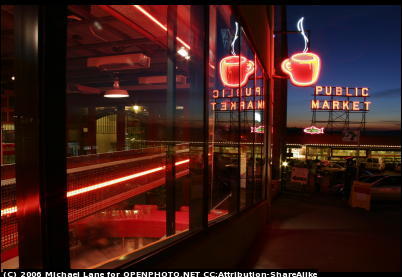
photo © Michael Lane for openphoto.net
Starbucks clearly never heard the term 'viral email'
It perhaps wasn't the smartest offer in Starbucks long corporate history. When the company sent an email round to its employees with a coupon for a free 'grande' iced drink, suggesting that they forward it to 'friends and family', it probably shouldn't have been hard to work out that it might end up getting forwarded to rather a large number of people.
But when they noticed how many people were showing up claiming their free drinks, they quickly pulled the offer, a month before it was originally due to expire.
And now an attorney in New York is suing them for $114million, on the grounds of 'betrayal' and 'fraud'.
Peter Sullivan has launched a class-action suit against the company on behalf of all the people denied a free drink. However, currently the only plaintiff actually involved is a paralegal named Kelly Coakley.
Mr Sullivan hopes that some other people will join his lawsuit in the fullness of time.
He said: 'In New York, this is of great significance to many people day-to-day. There were lines of people outside Starbucks. There are a lot of upset people.'
The case is already being compared by some to the lawsuit in which McDonalds were sued over their coffee being too hot. The difference here being that nobody was caused third degree burns.
This article originally appeared in metro.co.uk on 12 September 2006
http://www.metro.co.uk/weird/article.html?in_article_id=19596&in_page_id=2
 photography provided through flikr
But beverage is still no substitute for fruits and vegetables
The Associated Press
WASHINGTON - When the Ink Spots sang “I love the java jive and it loves me” in 1940, they could not have known how right they were.
Coffee not only helps clear the mind and perk up the energy, it also provides more healthful antioxidants than any other food or beverage in the American diet, according to a study released Sunday.
Of course, too much coffee can make people jittery and even raise cholesterol levels, so food experts stress moderation.
The findings by Joe A. Vinson, a chemistry professor at the University of Scranton, in Pennsylvania, give a healthy boost to the warming beverage.
“The point is, people are getting the most antioxidants from beverages, as opposed to what you might think,” Vinson said in a telephone interview.
Antioxidants, which are thought to help battle cancer and provide other health benefits, are abundant in grains, tomatoes and many other fruits and vegetables.
Vinson said he was researching tea and cocoa and other foods and decided to study coffee, too.
His team analyzed the antioxidant content of more than 100 different food items, including vegetables, fruits, nuts, spices, oils and common beverages. They then used Agriculture Department data on typical food consumption patterns to calculate how much antioxidant each food contributes to a person’s diet.
They concluded that the average adult consumes 1,299 milligrams of antioxidants daily from coffee. The closest competitor was tea at 294 milligrams. Rounding out the top five sources were bananas, 76 milligrams; dry beans, 72 milligrams; and corn, 48 milligrams. According to the Agriculture Department, the typical adult American drinks 1.64 cups of coffee daily.
That does not mean coffee is a substitute for fruit and vegetables.
“Unfortunately, consumers are still not eating enough fruits and vegetables, which are better for you from an overall nutritional point of view due to their higher content of vitamins, minerals and fiber,” Vinson said.
Dates, cranberries, red grapes
Dates, cranberries and red grapes are among the leading fruit sources of antioxidants, he said.
The antioxidants in coffee are known as polyphenols. Sometimes they are bound to a sugar molecule, which covers up the antioxidant group, Vinson said.
The first step in measuring them was to break that sugar link. He noted that chemicals in the stomach do the same thing, freeing the polyphenols.
“We think that antioxidants can be good for you in a number of ways,” including affecting enzymes and genes, though more research is needed, Vinson said.
“If I say more coffee is better, then I would have to tell you to spread it out to keep the levels of antioxidants up,” Vinson said. “We always talk about moderation in anything.”
His findings were released in conjunction with the annual convention of the American Chemical Society in Washington.
In February, a team of Japanese researchers reported in the Journal of the National Cancer Institute that people who drank coffee daily, or nearly every day, had half the liver cancer risk of those who never drank it. The protective effect occurred in people who drank one to two cups a day and increased at three to four cups.
Diabetes risk
Last year, researchers at the Harvard School of Public Health found that drinking coffee cut the risk of developing the most common form of diabetes.
Men who drank more than six 8-ounce cups of caffeinated coffee per day lowered their risk of type 2 diabetes by about half, and women reduced their risk by nearly 30 percent, compared with people who did not drink coffee, according to the study in Annals of Internal Medicine.
Bonnie Liebman, nutrition director of the Center for Science in the Public Interest, said she was not surprised by Vinson’s finding, because tea has been known to contain antioxidants.
But Liebman, who was not part of Vinson’s research team, cautioned that while many people have faith that antioxidants will reduce the risk of cancer, heart disease and more, the evidence has not always panned out. Most experts are looking beyond antioxidants to the combination of vitamins, minerals other nutrition in specific foods, she said.
This article previously appeared on msnbc.com - http://www.msnbc.msn.com/id/9105892/
By Pablo Paster for TriplePundit
11 September 2006
This week's question comes to us from TriplePundit creator, Nick Aster: "What's better for my daily coffee in the context of as many different environmental and social impacts you can think of? - an aluminum mug, a ceramic mug, or a new paper cup every day?" To make things a bit more interesting I am going to take some artistic license and change the question to encompass a Stainless Steel Mug, a Ceramic Mug, and a Styrofoam Cup. Since we are such a caffeine fueled society I have chosen to compare each of these at a 16 oz. size.
Stainless Steel (SS) is a ferrous alloy (a combination of two or more elements that includes iron). It contains at least 10% Chromium, which gives it anti-corrosive properties (English: it won't rust). Each gram of SS is responsible for the use,displacement, or consumption of 14.4g of abiotic material (mineral substances including ore and fossil fuels), 205g of water, and is responsible for the release of 2.8g of greenhouse gasses (GHGs).
Ceramic is an " inorganic non-metallic materials whose formation is due to the action of heat" (hooray Wikipedia!). Basically it is a clay that requires kiln firing to remove moisture... Since it is made by heating up some dirt it's impact is relatively minimal. To create one gram of ceramic we inconvenience 2.11g of abiotic material (mostly the clay and some natural gas), 5.3g of water, and we create a mere 0.065g of GHGs.
Our final material for this analysis is polystyrene ("many styrenes", linked in a long chain), also known by the brand name Styrofoam. Polystyrene (PS) is a thermoplastic (meaning that it can be melted repeatedly, as opposed to a thermoset plastic like epoxy which can not be melted), making it recyclable. Unfortunately it is not recycled in many states, including California. The reason for this can be found in simple economics. Since expanded polystyrene (foam, as opposed to the PS that is found in many clear drinking cups, especially on many airlines) takes up a lot of space, relative to its low weight, it can not be economically transported over long distances to the nearest recycling plant that is capable of processing it. Pre-processing it locally before shipment requires expensive equipment which is not justified by the low value of the recycled material (since it's just so cheap to make it from scratch). So, to our dismay, most of it ends up in landfills (to be extracted by future generations, right?). To create 1 gram of PS requires the use of 2.51g of abiotic material (mostly the oil from which it is made), 164g of water, and is responsible for the release of 2.8g of GHGs.
Since the PS cup is considered disposable and the other two are intended for daily reuse we are comparing apples to oranges, right? Well, not if we compare them per "service unit." In this case our service unit is " the service of holding the caffeinated morning beverage of our choice while we drag ourselves to work." We have analyzed the materials, now we need to determine the material intensity per unit.
In my research I found the weights of each of the following 16 oz. beverage containers:
Polystyrene - 6g
Ceramic - 322g
Stainless Steel - 378g
Now, by multiplying the material intensity values that we found earlier by each container's weight, we can find their total material intensity. For each 16 oz. container we use the following amount of abiotic material:
Polystyrene - 14.8g
Ceramic - 679.4g
Stainless Steel - 5454.5g
Based on this result alone, you would have to use your mug at least 46 times (daily for a month and a half) and you would have to use your SS mug at least 369 times (daily for a year) to justify its higher material intensity. The results for water are a little more difficult to grasp since water is a renewable resource that continues through its natural cycles after we use it (PS - 966g, Ceramic - 1,706g, SS - 77,528g). For the highly-processed SS, we need 164 times as much water as the mug holds ( 77.5 liters)!
The results in the GHG category are also quite striking. Keep in mind that, based on UN figures on the cost of climate change and the annual global CO2 emissions, each ton of GHGs is responsible for $8 in damages. (PS - 16.5, Ceramic - 20.9, SS - 1068g) Again, the Stainless Steel has the greatest material intensity with over 1kg of GHGs, or roughly $0.01 in climate change-related damages.
This essentially concludes my analysis. In summary, a ceramic mug has the lowest material intensity of the three as long as you use it at least 46 times. Since most ceramic mugs enjoy long and happy lives in our kitchens this is quite feasible. But please remember that purchasing tacky or holiday-themed mugs that will recieve limited use actually have a higher environmental impact than styrofoam cups do! So, if you don't already have a reusable beverage container go out and get yourself something timeless and use it often.
Got you thinking? Please stay tuned to “Beanblog” for regular challenges in response to this and other sustainability issues that impact the coffee community and those who drink it.
To respond directly to Pablo post your response to
http://www.triplepundit.com/pages/ask-pablo-the-coffee-mug-debac-002246.php
Wm Wrigley has executed a limited launch for a coffee-flavoured chewing gum in the US called Doublemint Kona Crème.
The gum, on sale at 7-Eleven stores in the country, is retailing at GBP0.99 per 17-stick pack, according to the Chicago Sun Times.
The company's Wrigley's Coffee Gum has reportedly been a success since it was launched in China last year.
Wrigley is testing the water before a possible wider launch for Doublemint Kona Crème, but was unavailable for comment when contacted by just-food.
originally broadcasted 7 May 2006 source: just-foods.com
This gem was initially published in England by Ananova.com in 2004. We hope you can forgive me for recycling this two year old article..it was tooo good..
Hamburg- Treating hair with caffeine products can stop men from going bald, according to a (not so) new German study.
Professor Peter Elsner, part of the team at Jenna University, said that the stimulant has the most effect on men whose hair roots were very sensitive to testosterone, one of the causes of hair loss.
But the research does not mean that coffee drinkers will be spared a baldhead in later life, only those who smear it directly on their heads.
Adolf Klenk of Kurt Wolff cosmetic research said: “One would have to drink between 60 and 80 cups of coffee a day for the necessary amount of caffeine to reach the roots.
He said that men who are frightened that they may lose their hair should start treating their scalps with caffeine while they are young.
09/08/2006
By ALLISON LINN / Associated Press
The battle for the best cup of coffee in Seattle is waged long before liquid hits cup, in cavernous rooms where coffee beans are piled high and noisy equipment churns out each company's unique coffee roast.
Many of Seattle's local roasters insist their small scale, decades-old roasting machines and intense attention to detail allows them to make a better cup of coffee than industry giant and hometown competitor Starbucks Corp.
Seattle's Caffe Vita roasts about 3,000 pounds of coffee a day, mostly in 80-pound batches, using circa 1939 equipment. In a cavernous, loud room behind one of the company's shops, the roasters say they judge whether a batch is done by listening, watching and smelling the coffee as it swirls around a big vat.
"It's full senses," says Andrew Daday, Caffe Vita's lead roaster.
Several times a week, Zoka Coffee owner Jeff Babcock heads down to the roasting plant located below his corporate offices to slurp spoonfuls of fresh coffee with the small group of roasters, who "cup" — or taste — the coffee twice a day to ensure quality .
"It's fine art," he says of the roasting and tasting process.
By contrast, Starbucks' 350,000-square foot roasting, packaging and warehouse plant in suburban Kent churns out up to 1.5 million pounds of coffee per week, using high-tech computer controls to monitor roasting equipment that can handle 400- to 600-pound batches of beans. The coffee there is subjected to periodic quality checks as well.
All three companies insist that they are roasting in small enough batches to guarantee quality.
"We're still a specialty coffee producer," says Gregg Clark, director of Starbucks' plant operations.
By Hal Weitzman in Lima
Published: 8/9/2006 Last Updated: 8/9/2006 21:05 London Time
"Ethical" coffee is being produced in Peru, the world's top exporter of Fairtrade coffee, by labourers paid less than the legal minimum wage. Industry insiders have also told the FT of non-certified coffee being marked and exported as Fairtrade, and of certified coffee being illegally planted in protected rainforest.
This casts doubt on the certification process used by Fairtrade and similar marks that require producers to pay the minimum wage.
It also raises questions about the assurances certifiers give consumers about how premium-priced fair trade coffee is produced.
As the board member of one Peruvian Fairtrade-certified coffee producer told the FT: "No certifier can guarantee they will purchase 100 per cent of a co-operative's production, so how can they guarantee that every bag will be produced according to their standards?"
Though certified coffee makes up less than 2 per cent of the global coffee trade it has become increasingly mainstream as large retailers such as Starbucks and McDonald's adopt it.
The FT visited five Peruvian smallholdings, all of which have Fairtrade certification.
Each farm hires 12-20 casual coffee pickers during the harvest season. All house and feed their workers, which allows them to deduct 30 per cent from their wages.
After that reduction from the legal daily minimum wage for casual agricultural workers of 16 soles ($5), farm owners are still obliged to pay at least 11.20 soles a day. In four of the five farms visited by the FT, pickers received 10 soles a day, while the other farm paid workers 12 soles a day.
Luuk Zonneveld, managing director of Fairtrade Labelling Organizations International, the Bonn-based body that sets fair trade standards, told the FT that the certification system "is not fool- and leak-proof" but said the problem should be put in context.
"Poor farmers often struggle to pay their workers fairly," he said. "Why are casual labourers there at all? There are wider issues here. We need to ask why this goes on and what we can do to help."
A number of industry insiders told the FT they had also witnessed fraud within the certification system which resulted in coffee from uncertified sources being exported as Fairtrade.
The FT has also been told of Fairtrade coffee being planted in protected national forest land in the northern Peruvian jungle. Using global satellite mapping, a Canadian NGO found that about one-fifth of all coffee production in one Fairtrade-certified association was illegally planted in protected virgin rainforest.
FT.com
The Financial Times Ltd.
 some have it...
By Brooke Bryant
CONTRA COSTA TIMES
And some people, like Moraga native Kate McMahon, look for a little social responsibility.
"My main goal is helping people become aware that just changing what cup of coffee they drink in the morning can make a difference," McMahon said, sipping a cup of fair-trade coffee earlier this month at Moraga's Caffe Terzetto.
McMahon returned home this summer after graduating from Occidental College with a bachelor's degree in psychology and decided that her hometown was ripe for a little social change. So, while she looked for employment, she also launched a fair-trade coffee campaign aimed at convincing businesses and residents alike to start sipping and serving java that is purchased from coffee farmers at a fair price.
That price is at least $1.26 per pound -- a big increase over the 30-50 cents per pound that farmers usually make, said McMahon, 22. The fair trade certification also means that a farmer employs environmentally sustainable practices and doesn't use forced and child labor, while buyers deal directly with the farmers, cutting out the middlemen (called "coyotes" in Latin America) who typically absorb much of the profits on the free market, she said.
McMahon, who was introduced to the fair trade concept in a college class and turned to the Internet to learn more, started by approaching local cafes.
Within a few weeks, she had convinced Terzetto's owner to switch her entire stock of coffee products to fair trade, without raising prices.
Other businesses and groups have been slower to get on board, but McMahon still has big plans for the town. She wants to work with professors at St. Mary's College to incorporate fair trade into their classes, and eventually switch the college to fair-trade coffee, and she plans to lobby the Moraga Town Council to either encourage fair-trade coffee use in town, or at least serve it at their own meetings.
Moraga isn't a progressive haven like Berkeley, but McMahon said she figured the fair trade movement was perfect for the town.
"I thought the coffee campaign would be really good, because I felt like if I had come here with a different campaign like 'Save the animals' and 'Don't buy fur,' it wouldn't be as effective as, 'All you need to do is change your cup of coffee,'" she said.
Fair trade coffee accounts for about 2 percent of the coffee sold in this country, which puts conscientious coffee drinkers like McMahon solidly in the minority. But she's also part of what fair trade advocates call the fastest growing sector in the coffee business, with U.S. sales increasing from $48 million in 2000 to $369 million in 2004.
These days, coffee drinkers can get fair-trade coffee at national coffee chains such as Starbucks and grocery stores such as Safeway. Even McDonald's jumped on the fair trade bandwagon this fall, offering fair-trade coffee in some of its New England restaurants.
Advocates say that fair trade retailers are able to keep prices down by cutting out the middlemen, and note that in recent years fair-trade coffees have won awards for taste.
Most importantly to many, the movement has generated an extra $67 million in income for coffee farmers since 1998, according to statistics from Oakland-based TransFair USA, which certifies fair trade products.
Critics say that fair trade interferes with the free market, offering artificially inflated prices that hinder the market forces that usually control supply.
Fair trade certification groups like TransFair even sometimes come under fire from the activist community, TransFair spokeswoman Nicole Chettero said. Some grumble about "green washing" -- when a company switches a small percentage of its stock to fair-trade to take advantage of the good PR.
But even a small percentage of sales from a coffee giant like Starbucks translates into a lot of extra dollars for coffee farmers, Chettero said. Fair trade certified coffee was just 1.6 percent of Starbucks' coffee purchases in 2004, but that amounted to 4.8 million pounds of coffee, which was more than double the amount it purchased in 2003, according to a Starbucks report.
"We see things from the position of the farmer," Chettero said. "We want to increase as much fair trade revenue as possible, so we see the dissemination of fair trade products in mainstream as helping."
For McMahon, the decision to drink fair trade was easy.
She says that the time she spent in a Buddhist monastery over the summer helped make her more aware of her connection to the rest of the world, including all the work that goes into her morning cup of coffee. She is used to finding practical applications for her principles, steering clear of stores like Wal-Mart, buying sweat-shop-free clothes, and recently moving into an eco-friendly house in Walnut Creek.
"I try to keep myself to a standard of valuing other people and trying to live by those values [with] what I buy and all that stuff," she said. "I felt like I was being hypocritical going and drinking coffee that was made by child slaves."
Coffee, red wine and chocolate are the key to preventing heart disease, it was claimed yesterday.
Glasgow University professor Alan Crozier told a conference the so-called "bad foods" actually protected the heart and arteries.
And he told delegates: "Have a cup of coffee, drink two or three glasses of red wine a day, take a cup of green tea, eat 100 grams of dark chocolate and be happy."
He was addressing the World Congress of Cardiology in Barcelona.
The professor said all the foods he mentioned were rich in antioxidant properties.
They protect the heart and arteries from oxidative damage, similar to the rust that develops on metal after a period of time.
Dark chocolate can boost levels of antioxidants in the blood by 20 per cent while drinking red wine can also help fend off heart disease.
Professor Crozier said that New World wines with ample sunshine, including Chile, Argentina, Australia and South Africa, were the best when it comes to producing the antioxidants.
Table grapes, which were often picked early, had fewer antioxidants even when they were of the same variety as wine grapes, which had been left to ripen thoroughly.
But the Glasgow professor of plant biochemistry and human nutrition warned that because of the adverse effects of excessive alcohol, it should be no more than 2-3 glasses of red wine per day.
He said milk chocolate did not have the same healthy properties as dark.
A recent study revealed that you need twice as much milk chocolate as dark chocolates to obtain the same amount of antioxidants.
Professor Crozier said: "Eating seemingly 'bad' foods may seem like a good idea, and in fact can be not too bad a thing - if chosen carefully and eaten in moderation.
"Foods with high levels of antioxidants can cut the risk of heart disease and some types of cancer."
Some fruits and vegetables also have high antioxidants.
Adding cherry tomatoes to a salad rather than normal sized tomatoes can also boost health as they contain 10 times the level of antioxidants.
And using lollo rosso lettuce will provide much higher amounts of antioxidants than iceberg lettuce.
Professor Crozier also said that frozen berries such as blackberries, redcurrants and raspberries were a rich source of antioxidants.
STUDENTS should be given fish oil to boost their brainpower, it was claimed yesterday.
After trials in England, scientists believe omega-3 fatty acids in the oil can improve mental ability.
Fish oil has already been heralded as good for arthritis and heart disease.


 Posts
All Comments
Posts
All Comments